








Your commute is costing more than money. Here’s the full picture.
Most people measure their commute in minutes. If they’re feeling particularly responsible, they might track their gas mileage. But a car commute has three distinct costs and most of us are only ever reckoning with one of them.
If you look at the “Three Pillars” of your daily drive, the math changes instantly.
?
PLANET
11x
lower Co2 per mile vs. car
❤️
HEALTH
52%
lower cardiovascular risk
?
WALLET
$2,150+
average annual vehicle savings
4.2 tons
CO₂ produced by the average car every year
Source: U.S. Environmental Protection Agency
Transportation is the single largest source of greenhouse gas emissions in the United States. And the hardest part: more than half of all car trips are under 6 miles. Short trips with constant stops, idling in traffic, driving to the coffee shop four blocks away.
The exact kind of driving an ebike was designed to replace and the kind that produces a disproportionate share of emissions per mile.
The Planet Impact
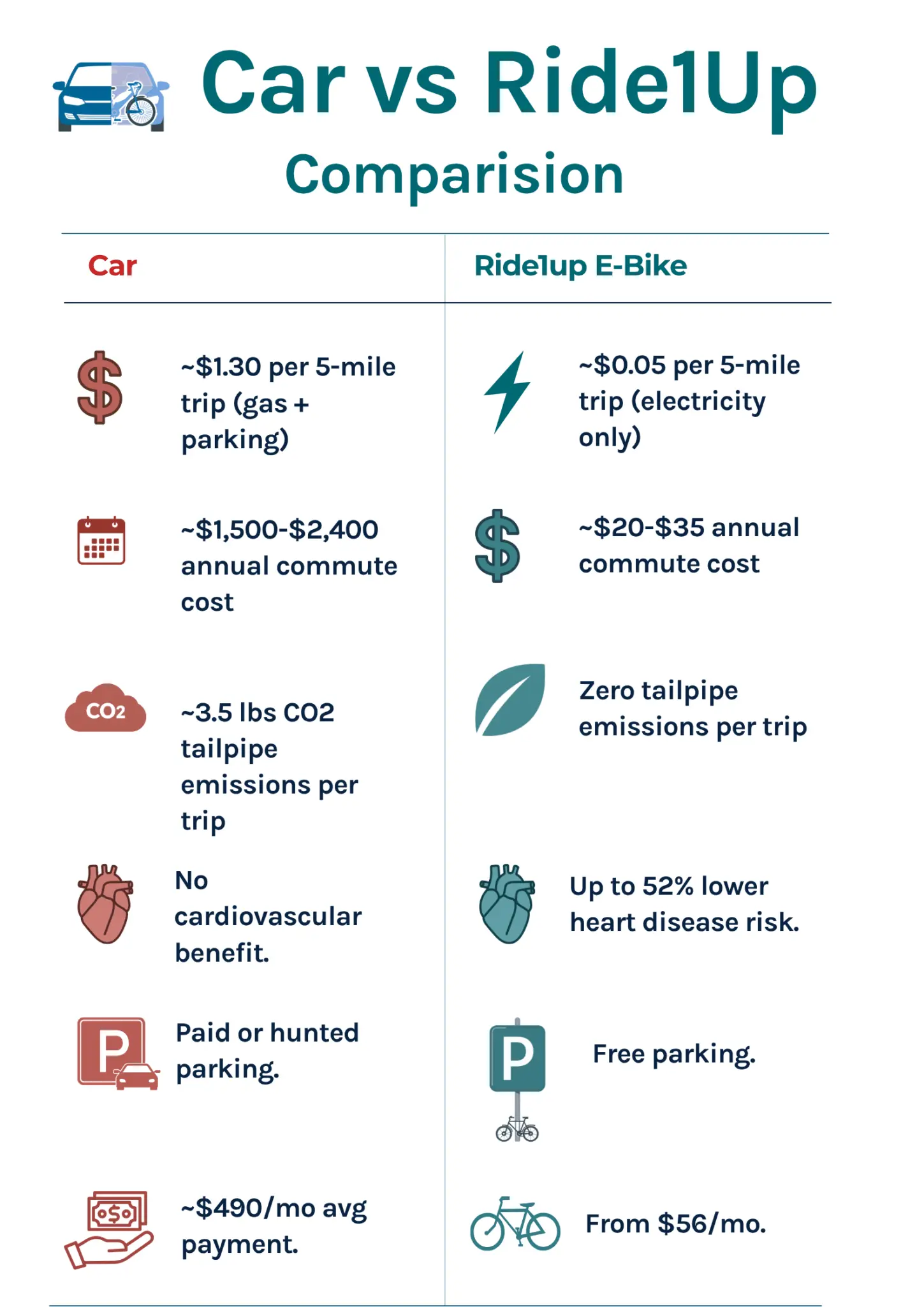
An e-bike produces roughly 35 grams of CO₂ per mile even accounting for electricity generation and the full production lifecycle. An average car produces about ~400 grams per mile. That’s a 11× difference on every trip.
For a 5-mile round-trip commute, five days a week, switching to an ebike eliminates roughly 1.1 metric tons of CO₂ per year. From one commute. That’s not a rounding error that’s meaningful impact.
Your Body Gets It Too
A 2017 study in The Lancet tracked 260,000 people over five years. The result? Regular cycling reduces cardiovascular disease risk by 52%.
But here is where the ebike wins: it removes the “barrier to entry.”
- You don’t need a high fitness level to start.
- You don’t arrive at the office drenched in sweat.
- You dial the motor up when you’re tired, and dial it back when you want a workout.
It’s “stealth exercise.”
Over 200 working days a year, that movement compounds quietly. You don’t need a gym membership; you just need to go to work.
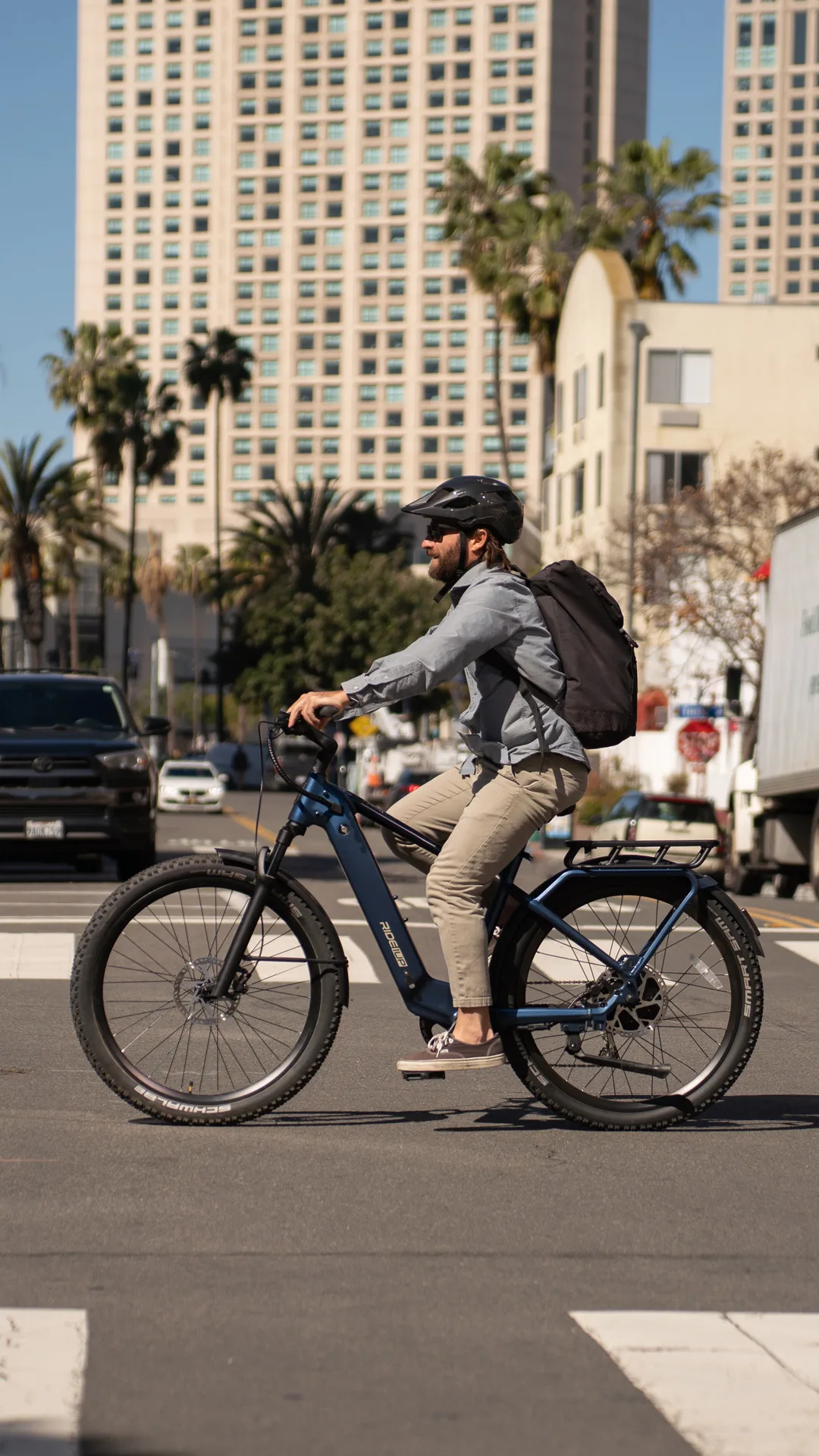
$2,150+
Average Annual Vehicle Savings For A Ride1Up Commuter
Based on rider-reported savings vs. pre-switch driving costs
The financial case is the most concrete part of the math. Let’s look at what it actually costs to keep a “commuter car” on the road:
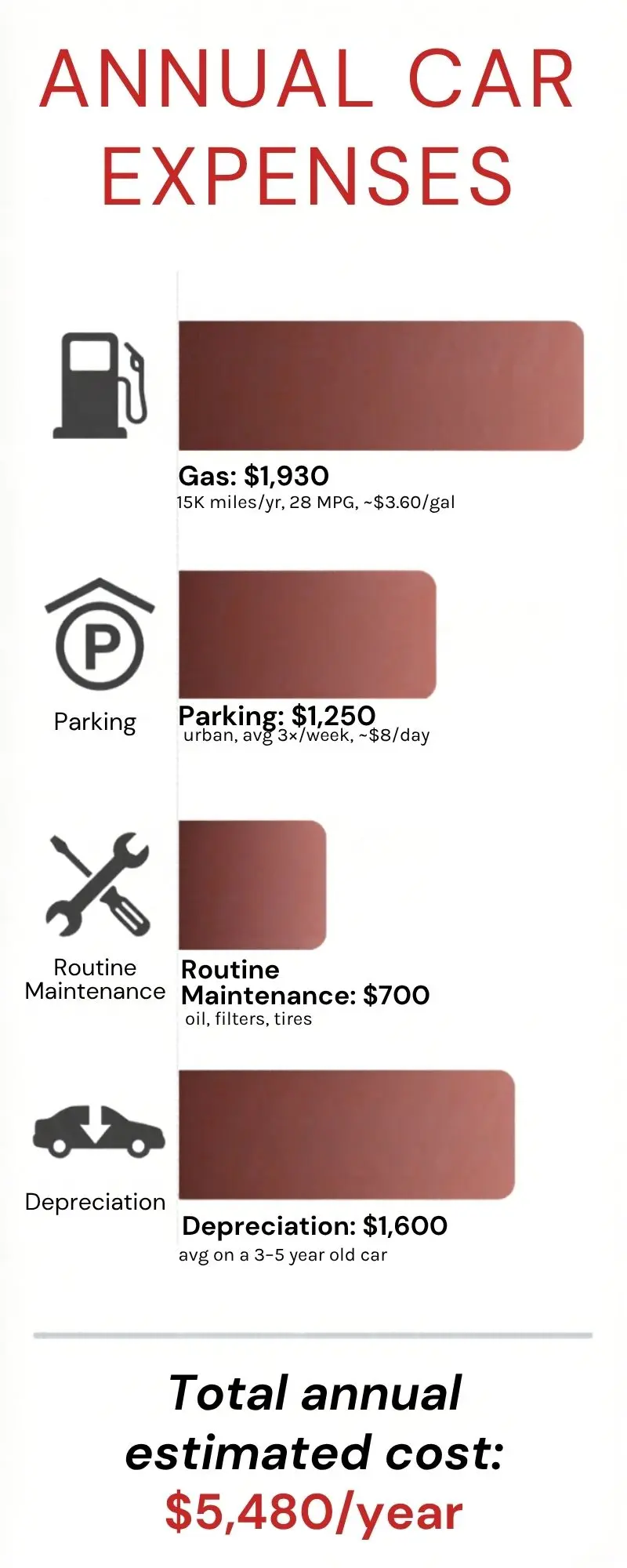
Not counting insurance. Or registration. Or the last alternator.
A full charge on a Ride1Up costs $0.15–$0.25 in electricity. Most riders charge 3–4 times a week. The entire annual electricity cost for a year of daily commuting is roughly what you’d spend on gas in four days.
Which Bike Fits Your Commute
Three bikes. Three different kinds of commuter. The choice comes down to distance, terrain, and how much you want to carry.
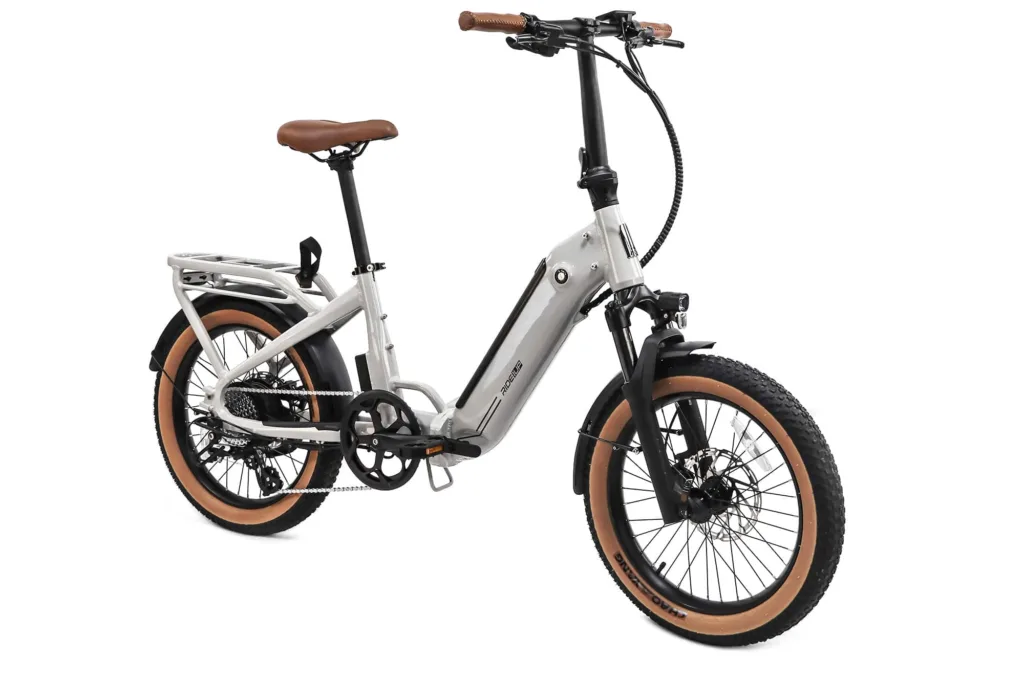
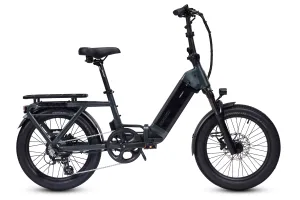
Portola
From $995
Most-visited bike on ride1up.com. 750W motor, up to 50 miles per charge. If you’re not sure, this is where most riders start.
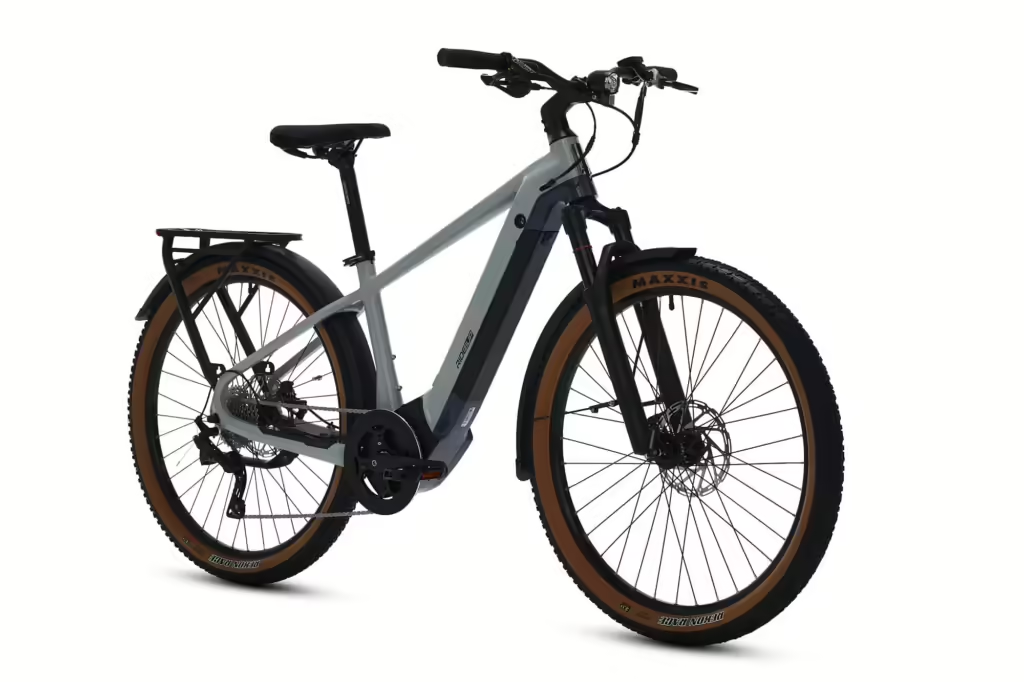
Prodigy v2
From $1,795
Quite 750W motor with 95nm of torque, powered by intui-drive. Built for speed agility. For riders who want speed without the bulk.
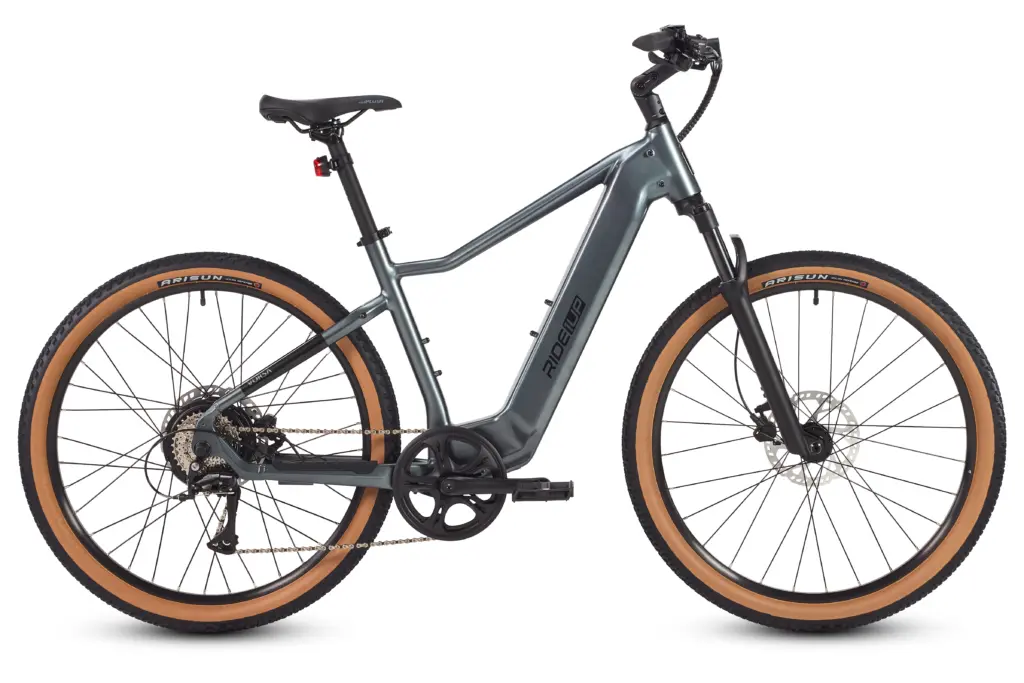
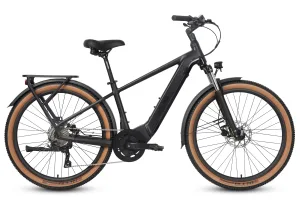
Vorsa Lite
From $1,495
German Brose mid-drive. Silent, torque-sensing, 28 mph Class 3. Comparable to mid-drives in bikes at $4,000+. Built for 15+ mile daily commuters who want the premium ride.


