



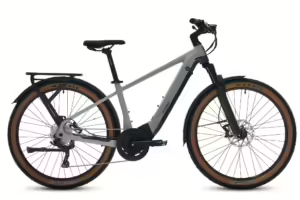


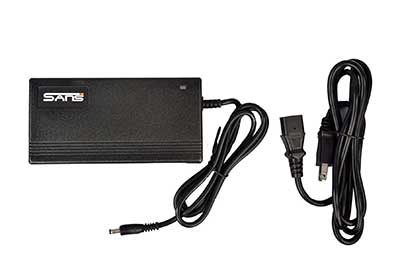


At Ride1Up, we are committed to pushing the boundaries of e-bike performance and safety. As we look toward the future of electric mobility, we are excited to share the technical breakthroughs of Semi-Solid-State Battery technology and the “present” of the global battery industry.
What is a Semi-Solid-State Battery?
While the industry works toward the ultimate goal of “all-solid-state” power, semi-solid technology offers a pragmatic, high-performance intermediate path.
- The “Solid-Liquid Hybrid” System: Our semi-solid batteries combine a solid-state electrolyte with a small amount of liquid.
- The Gold Standard: By industry standards, these batteries utilize a mass of 90%–95% solid-state electrolyte, reducing liquid content to just 5%–15%.
- The Best of Both Worlds: This configuration preserves the high ionic conductivity found in liquid electrolytes while significantly improving safety and suppressing lithium dendrite growth through solid components.
Key Performance Metrics
Our semi-solid battery systems are designed to deliver elite power without compromising on longevity or reliability.
| Performance Metric | Typical Value Range | Remarks |
| Energy Density | 280 Wh/kg (cell level) | Highest achievable energy density for semi-solid batteries under safety assurance |
| Rate Capability | Battery pack continuous 2C discharge, up to 90% SOC | — |
| Cycle Life | 1200 cycles | — |
| Low-Temperature Performance | Normal operation at -20°C | Gel electrolyte and polymer membrane structure give excellent wide-temperature adaptability |
| Ionic Conductivity | 8.0×10⁻⁴ S/cm | Semi-solid polymer electrolyte achieves 8.0×10⁻⁴ S/cm ionic conductivity and Li⁺ transference number of 0.75, significantly suppressing concentration polarization and dendrite growth |
Advanced Material Systems
We leverage cutting-edge chemistry to ensure every Ride1Up journey is backed by the safest and most efficient tech available.
- The Electrolyte: We focus on the Polymer route, which uses high-molecular polymers for better flexibility and process reliability. Partnering with innovators like Heyuan Lithium Inno, we utilize a three-step polymerization process to ensure internal stability.
- The Cathode: We use high-safety Ni-Co-Mn ternary (NMC 5/6-series) systems. This provides a 10–15% energy density improvement over conventional batteries and allows our packs to pass rigorous nail penetration and drop tests.
- The Anode: We have fully transitioned to Silicon-Carbon (SiC) anodes. By pairing ultra-high-nickel cathodes with matured silicon-carbon technology, we increase energy density without relying on unstable lithium metal anodes.
Comparison with All-Solid-State Batteries
Essential difference: All-solid-state batteries contain no liquid electrolyte; the electrolyte is purely solid. This is the ultimate industry goal, but still faces three major bottlenecks: poor solid-solid interfacial contact, complex manufacturing processes, and high cost. Large-scale commercialization of all-solid-state batteries is not expected until at least 2035.
Positioning of semi-solid batteries: Semi-solid is a pragmatic intermediate path “paving the way for all-solid-state industrialization”. It combines high safety, high energy density, and manufacturability. It represents the “present” of the global battery industry, while all-solid-state remains in the “future”.
Global timeline: Leading players in China, Japan, South Korea, and Germany have set the starting point for all-solid-state mass production (lab level) around 2027.
Manufacturing Process
Solid-state electrolyte coating process: With companies like Heyuan Lithium Inno as an example, it has developed solid-state electrolyte particles below 100 nm (a significant improvement over the industry norm of 300 nm). The electrolyte is uniformly coated onto the cathode material, like putting a “safety armor” on the cathode, greatly enhancing stability and safety.
The Future is Already Here
While all-solid-state batteries face bottlenecks like high costs and complex manufacturing (not expected for large-scale use until 2035), semi-solid technology is ready now.
Giant has launched five mass‑produced vehicle models all equipped with Heyuan Lithium Inno’s high-safety semi-solid batteries. This marks the official shift of the two‑wheeler industry toward semi‑solid technology. Many leading companies are actively engaging with semi‑solid battery suppliers.
We are proud to be part of the movement bringing mass-produced, nationally certified semi-solid batteries to the market, achieving the difficult goal of combining 280 Wh/kg energy density with 2C discharge capabilities and peak safety.

Service & Support
Seasoned Bike Mechanics Offer Expert Technical Support and Friendly Customer Service.
Learn More
1-Year Warranty*
Every Ride1Up ebike Comes With a Warranty Against Manufacturing Defects. *Terms Apply
Learn More
30-Day Returns*
We're Confident That You'll Be Thrilled! If Conditions Are Met, Send It Back For a Refund. *Terms and Model Exclusions Apply
Learn More
Free Shipping
On All Bikes to Contiguous 48 States. Direct shipping to Canada starts at $100. Exclusions Apply.
Learn More